 English
 العربية
 中文(简体)
 Français
 Deutsch
 Italiano
 پارسی
پارسی Português
 Русский
 Español

The Core Difference: Code vs. Data
In embedded system design, memory selection isn’t just about capacity; it’s about architecture. Choosing the wrong chip for a drilling tool or industrial controller doesn’t just mean wasted budget—it means system lag, boot failures, or data loss in the field.
The industry rule of thumb is simple: Code runs on NOR Flash, Data lives on NAND Flash
- NOR Flash: Offers “XIP” (eXecute In Place). It allows the processor to run code directly from the flash memory, much like RAM. It features high-speed random access but slow write speeds.
- NAND Flash:Works like a hard drive. It reads and writes in blocks. It offers massive storage density and fast write speeds but cannot run code directly (shadowing to RAM is required).
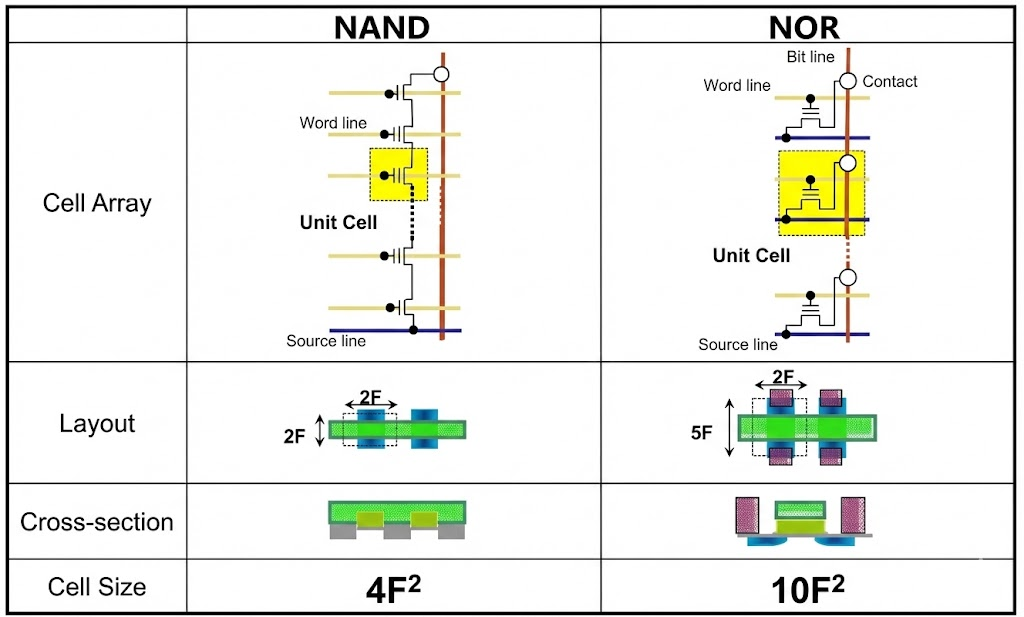
Technical Showdown: Speed, Cost, and Endurance
When selecting a component, compare these three critical factors:
- Read Speed: NOR wins on random read speed (essential for boot-up). NAND is faster for sequential data reading.
- Write/Erase Speed: NAND is significantly faster here. If your system logs high-frequency sensor data, NAND is the correct choice. NOR has slow write speeds, making it unsuitable for large data logging.
- Reliability: NOR is inherently reliable with few bit errors. NAND requires a controller with ECC (Error Correction Code) and bad block management to function correctly.
| Feature | NOR Flash | NAND Flash |
| Primary Use | Boot Code (BIOS/Firmware) | Data Logging & OS Images |
| Read Speed | Very Fast (Random) | Fast (Sequential) |
| Write Speed | Slow | Very Fast |
| Capacity | Low (1Mb – 2Gb) | High (1Gb – 1Tb+) |
| Reliability | High (No ECC needed) | Lower (Requires ECC Controller) |
| Cost per Bit | High | Low |
Designing for Harsh ENvironments
For general electronics, standard specifications work fine. However, for Oil & Gas or Aerospace applications, environmental factors dictate your choice.
Temperature Grades
Downhole tools (MWD/LWD) operate in environments far exceeding the standard industrial range (-40°C to 85°C). You need components tested for 175°C or higher.
This is where specialized high temperature electronics 200c suppliers We verify that the SLC NAND you buy is rated to survive these extremes without data retention loss.
Packaging Matters
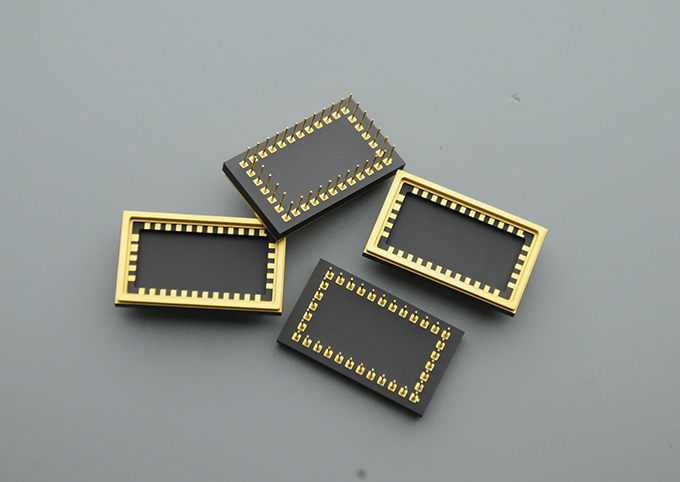
Vibration and thermal cycling kill chips. Engineers often debate the merits of ceramic vs plastic package for high temp applications. While plastic is cost-effective, it expands and contracts differently than the silicon die, leading to wire bond fatigue. For mission-critical drilling tools, hermetically sealed ceramic packaging is often the only safe option to prevent moisture ingress and mechanical failure.
The Supply Chain Challenge: Obsolescence
The Flash memory market moves fast. Manufacturers like Micron or Cypress frequently discontinue low-density NOR chips to focus on higher-capacity products.
This creates a supply gap for legacy systems. For example, many engineers are currently struggling to find a configuration memory replacement for obsolete Xilinx FPGA boards. The FPGA still works, but the specific NOR Flash needed to boot it is gone.
This is why managing component obsolescence is a core part of our business. We help you navigate EOL (End of Life) notices by locating authorized surplus stock or identifying 100% pin-compatible alternatives that don’t require a board redesign.
سوالات متداول: Industrial Memory Selection
Q: Can I use NAND Flash to boot my system?
A: Not directly. Most processors cannot execute code from NAND. You typically need a small NOR Flash for the bootloader, which then loads the OS from the NAND into RAM.
Q: Why choose SLC NAND over MLC for oil & gas applications?
A: SLC (Single Level Cell) has 10x-20x the endurance of MLC and significantly better data retention at high temperatures (up to 85°C or 105°C), which is critical for downhole tools.
نتیجه گیری
If your application needs instant-on booting and executes code directly, choose NOR Flash.
If you need to store operating systems or heavy data logs, choose SLC NAND(for reliability) or eMMC (for ease of use).
Need help selecting the right industrial memory?
Contact Trustyic for a consultation on high-reliability storage solutions.