 English
 العربية
 中文(简体)
 Français
 Deutsch
 Italiano
 پارسی
پارسی Português
 Русский
 Español
 Original Author: Majeed Ahmad
Source: Industry analysis and semiconductor market commentary
This article is adapted and summarized by Trusty IC for semiconductor industry professionals. The views and analysis belong to the original author.
Introduction: AI Is Moving Beyond the Data Center
Artificial intelligence has entered a new stage of development.
For years, AI innovation has been primarily driven by:
- Large AI models
- High-performance GPUs
- Massive data center infrastructure
However, the next evolution of AI is expected to move closer to the physical world.
Machines will increasingly need the ability to:
- Sense their environment
- Process information locally
- Make real-time decisions
- Interact with the physical world
This transition is driving the growth of Edge AI and Physical AI.
According to semiconductor industry analyst Majeed Ahmad, onsemi’s planned acquisition of Synaptics represents a significant strategic move toward this emerging AI ecosystem.
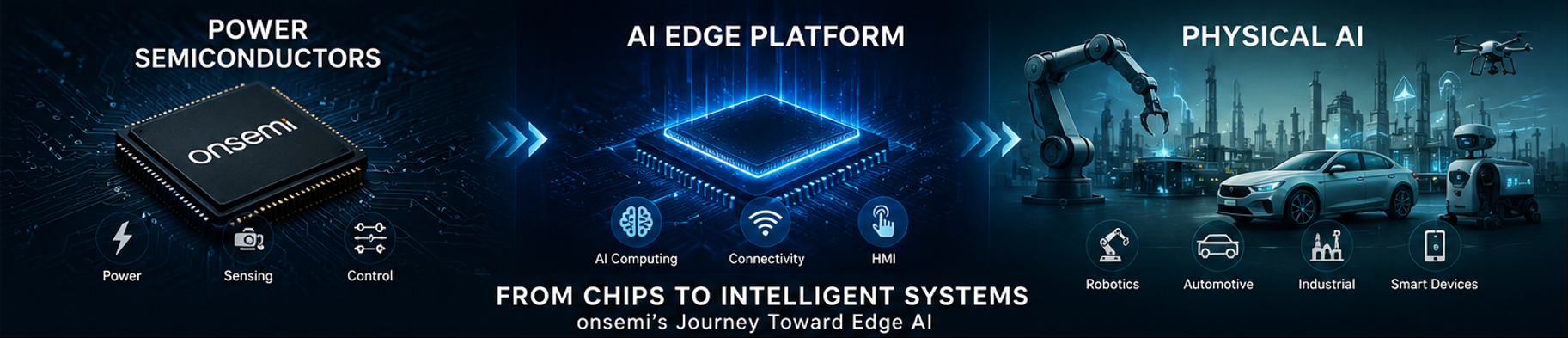
From Power Semiconductor Leader to AI Edge Platform Provider
onsemi CEO Hassane El-Khoury has once again taken a major strategic step in semiconductor industry transformation.
Previously, during his leadership at Cypress Semiconductor, El-Khoury played an important role in the company’s acquisition by Infineon Technologies in 2019.
That transaction strengthened Infineon’s position in computing, connectivity, and embedded solutions through Cypress’s technologies.
Today, El-Khoury is leading a different type of transformation at onsemi.
The company, traditionally recognized for:
- Power semiconductor technologies
- Sensor solutions
- Automotive semiconductor products
is now expanding toward:
- Edge AI computing
- Intelligent systems
- AI-enabled industrial and automotive applications
onsemi’s planned acquisition of Synaptics, valued at approximately $7 billion through an all-stock transaction, reflects this strategic direction.
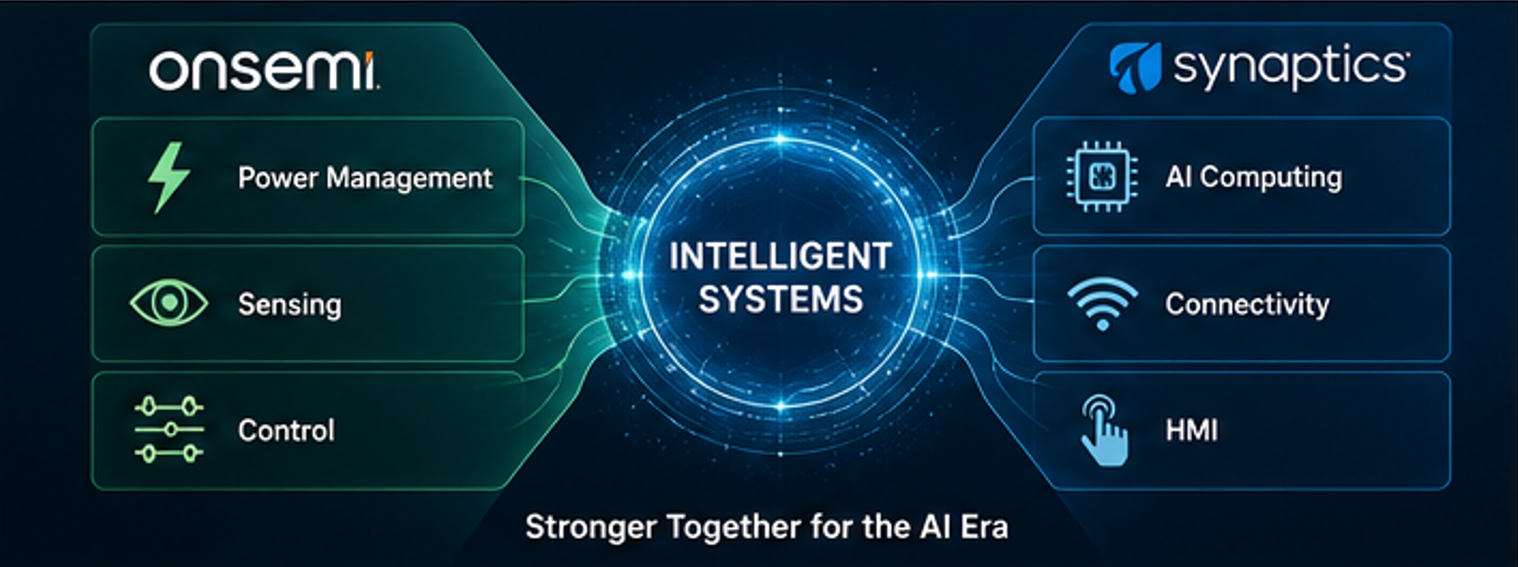
The combination of:
onsemi’s
- Power management
- Sensing technologies
- Control solutions
with
Synaptics’
- Edge AI computing
- Connectivity technologies
- Human-machine interface (HMI)
could create a broader semiconductor platform for the AI era.
Why Edge AI and Physical AI Matter
The core focus behind this acquisition is Edge AI.
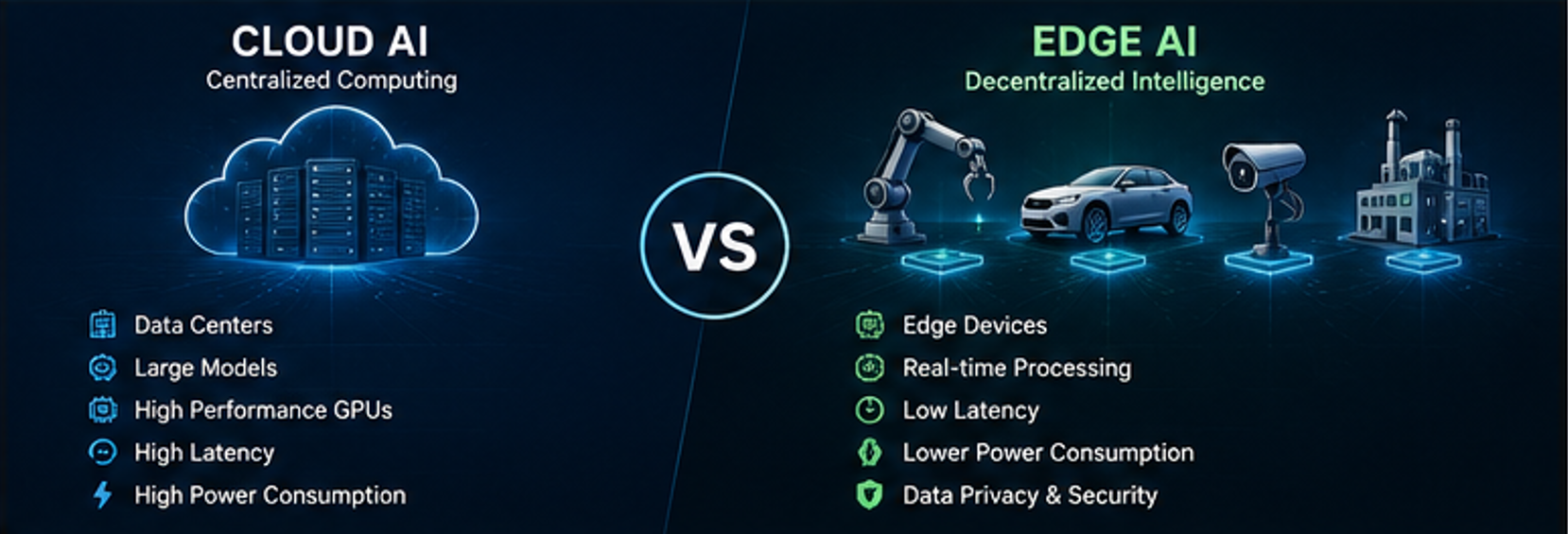
According to onsemi, integrating Synaptics’ edge AI computing capabilities with its human-machine interface and wireless connectivity technologies could expand the company’s capabilities beyond traditional power and sensing solutions.
Beyond Edge AI, the acquisition also points toward the emerging Physical AI market.
Physical AI refers to intelligent systems embedded into real-world machines, از جمله:
- Robots
- Autonomous vehicles
- Industrial equipment
- Smart devices
Unlike traditional AI applications that mainly process digital information, Physical AI requires machines to understand and respond to the real environment.
This requires the integration of:
- Sensors
- AI processors
- Connectivity
- Power management
- Control systems
The future competition may no longer be only about individual chips, but about complete intelligent systems.
Synaptics: Expanding From HMI to Edge AI
Founded in 1986, Synaptics became a pioneer in Human-Machine Interface (HMI) technologies.
Its innovations have supported applications including:
- Laptop touchpads
- Touchscreen solutions
- Display technologies
- Fingerprint recognition
- Voice interaction systems
In recent years, Synaptics has expanded beyond traditional HMI by combining:
- AI computing
- Wireless connectivity
- Intelligent edge processing
One example is the Astra platform, which integrates:
- AI processors and NPUs for multimodal intelligence
- Wireless connectivity including Wi-Fi and Bluetooth
- Open-source software support for faster deployment
These capabilities position Synaptics as an important technology provider in the Edge AI ecosystem.
Building the Foundation for Physical AI
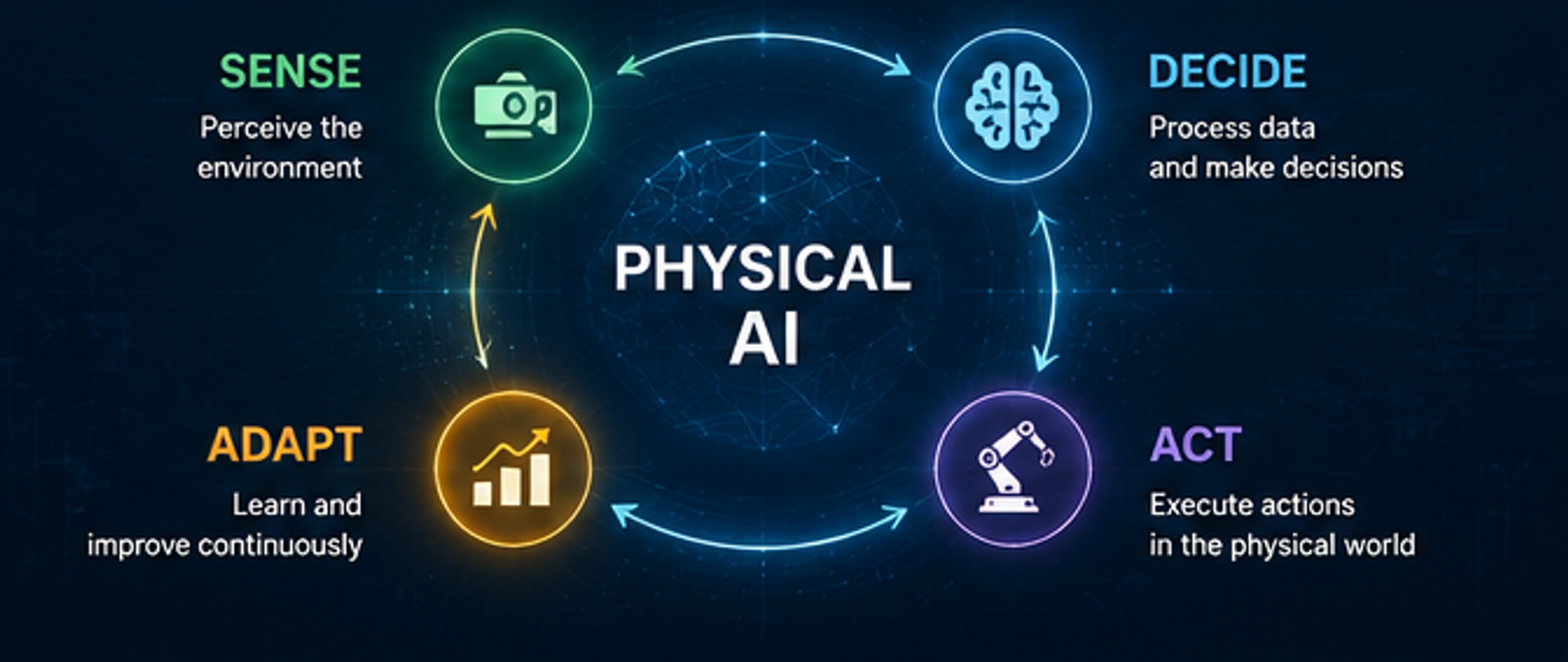
The strategic vision behind the acquisition is the combination of:
Power + Sensing + Connectivity + Computing + Control
These technologies represent the foundation of future intelligent systems.
For applications such as:
- Autonomous vehicles
- Robotics
- Smart factories
- Intelligent consumer devices
real-time intelligence requires seamless cooperation between hardware components.
The future of AI will not only depend on processing capability, but also on how effectively semiconductor technologies connect intelligence with the physical world.
Supply Chain Impact: New Opportunities for Semiconductor Components
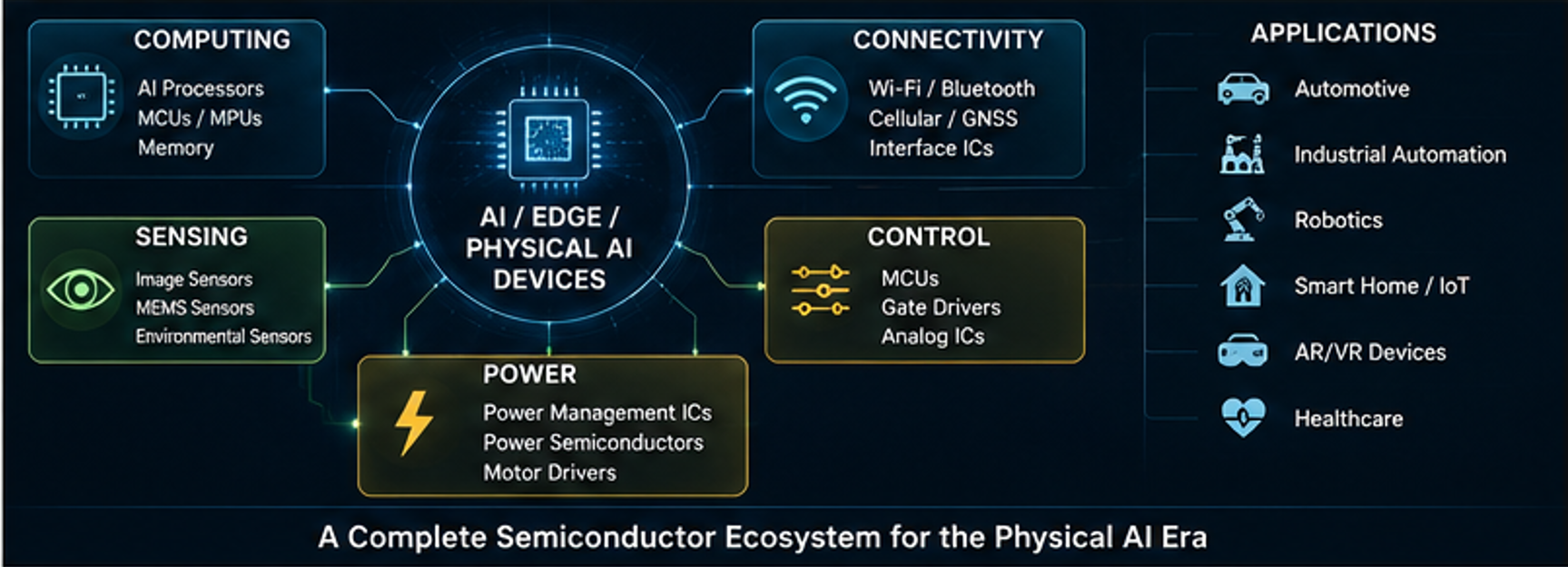
The growth of Edge AI and Physical AI will reshape semiconductor demand.
Future intelligent systems will require a wider range of components, از جمله:
AI Computing Components
- AI processors
- Embedded computing chips
- NPUs
Sensing Components
- Image sensors
- Environmental sensors
- Industrial sensors
Power Solutions
- Power management ICs
- Power semiconductor devices
- Motor control components
Connectivity Solutions
- Wireless communication chips
- Interface components
Unlike traditional computing systems, AI-enabled devices require highly integrated semiconductor ecosystems.
For manufacturers developing next-generation products, maintaining reliable access to critical electronic components will become increasingly important.
What This Means for Semiconductor Buyers and Manufacturers
As semiconductor technology evolves toward intelligent edge systems, companies will need to evaluate:
- Component availability
- Alternative sourcing strategies
- Long-term supply stability
- Product lifecycle management
The transition toward Physical AI may increase demand for specialized components across automotive, industrial automation, robotics, and smart device markets.
About Trusty IC
Trusty IC provides semiconductor sourcing solutions for global manufacturers and engineering teams.
Our focus includes:
- مدارهای مجتمع
- Sensors
- Power components
- اتصال دهنده ها
- Industrial electronic components
As AI, automation, and intelligent systems continue to evolve, reliable semiconductor supply chains are becoming increasingly important.
Trusty IC helps customers identify suitable components and sourcing solutions for challenging electronic applications.
نتیجه گیری
The planned onsemi and Synaptics combination reflects a broader transformation in the semiconductor industry.
AI is moving from centralized computing environments into real-world applications.
The companies that successfully integrate:
- Power
- Sensing
- Connectivity
- Computing
- Control
will be better positioned for the emerging Physical AI era.
Original Author: Majeed Ahmad
Adapted and published by Trusty IC for semiconductor industry discussion.